Larson + Shindelman


Larson + Shindelman

Work from Witness.

“Marni Shindelman and Nate Larson took this one step further with one of the best presentations of the conference, “Witness: A Psychic Collaboration.” Citing an investigation of extra-sensory perception that was sponsored by the United States government in the 1980s, they examined the “Stargate Project” and create images and writings as a result of their own experimentation with its methods. What happened was again a playful interaction with pseudo-science, photography, and art. Whether the collaboration failed in its psychic attempts was not the point; rather, the resulting material Larson presented was unpretentious and hilarious. After an initial evaluation of some of their remote viewing experiments (that were sometimes congruent, other times unclear), Shindelman later re-paired some of the objects and images from a curatorial perspective, and the result was fascinating. For those of us who enjoy serendipitous association, it was reassuring to see how simple curiosity can evolve into a thoughtful collaboration and tear through the standard limitations of photography and academia.” – John Aasp for Aftermiage

Thomas Demand


Thomas Demand

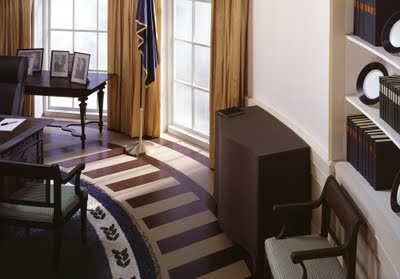
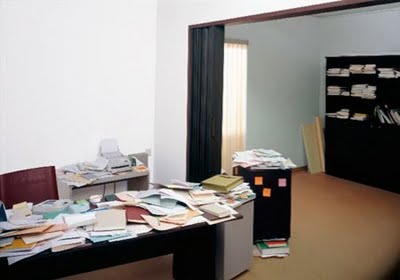
Work from his oeuvre. Also check out his work for After the Imperial Presidency.

“A dozen years ago, Thomas Demand, whose generally stellar midcareer retrospective opens today at the Museum of Modern Art, was studying in London, at Goldsmiths College, then the hotbed of the British art scene. He hit upon the idea to make life-size reconstructions of scenes, often ones he came across in photographs.

The reconstructions were meant to be close to, but never perfectly, realistic so that the gap between truth and fiction would always subtly show. Mr. Demand’s strategy was to photograph his reconstructions, producing the glossy, cinematic color prints also used by photographers like Thomas Struth and Andreas Gursky. Fellow Germans, they, like him but a little earlier, had trained at the art academy in Düsseldorf, although he studied sculpture, not photography. Their photographs had paintinglike presence, which Mr. Demand was after.

But unlike them, he was not photographing real places and, as in Mr. Gursky’s case, then occasionally fiddling with the images. Nor, for that matter, was he imitating Gerhard Richter, who inspired so many artists of Mr. Demand’s generation, by making paintings that suggested blurry photographs. Mr. Demand insisted on being a straight photographer, albeit of sly re-creations – or really, he was a sculptor, making models of places, to produce something that had the quality of painting.

Except that his medium was photography.

Still with me? If so, you should appreciate the cunning of Mr. Demand’s deadpan but lush panoramas, which at their best are hypnotic.

At a studio in Berlin, working just with colored cardboard and paper, Mr. Demand built the stairwell of a school, a hotel bathroom, a kitchen in the hut where Saddam Hussein hid out, a stadium with a swimming pool and a platform diving board, the inside of a neighbor’s house, a television studio, an airport security checkpoint, a copy shop, a thicket of trees – nearly all full-scale models of places, more or less mimicking what he saw in newspapers or magazines but sometimes based on private memories, and always unpeopled, stripped of affect, and strangely pregnant.

Mr. Demand’s pictures owed something to the wry, prosaic snapshots of banal and vernacular places by Ed Ruscha. Except they were devoid of detail and weightless. The photographs provoked a double-take after the inevitable first assumption that the scenes might be real. Then, on closer inspection, other issues revealed themselves.

Those issues included more than just photography’s inherent unreliability, its slipperiness as truth. Mr. Demand’s works are drily vexatious, like Chinese boxes. A patch of grass that he photographed turns out to be a laborious paper reproduction of a patch of grass, made blade by blade, which brings to mind a photograph by Mr. Gursky of a gray patch of carpet, itself devised as an ironic riff on Gerhard Richter’s all-gray paintings, which harked yet further back to Jackson Pollock’s drips. You can recognize this string of connections or not, but either way, the picture retains its flat-footed eloquence, with its unnatural swath of bright green nature, painstakingly made, implying, if not something obvious, then something.

Mr. Demand’s show, 26 works, some of them seen before in New York, and handsomely organized by the Modern’s curator, Roxana Marcoci, begins with “Drafting Room.” Tape, paper and T-squares rest on three long tables, neatly lined up in a white room. It is an architect’s spare studio, with windows to one side, opened to let in air and light. The room, silent, is constructed of a grid of slender pillars, which intersect in the photograph with the row of tables to make an allover geometry out of the picture – a clean, basically white-on-white, modernist image. Color is confined to a rectangle of pale blue paper tacked to one wall and to tiny touches like a red dispenser of Scotch tape on the farthest table.

“Drafting Room” is inspired by a photograph of the studio of Richard Vorhölzer, the architect who was in charge of much urban planning for postwar Germany. Mr. Demand’s photograph reconstructs as a model in his own studio a studio where models were made for the reconstruction of Germany.

The grid of the photograph and the design of the room evoke the Bauhaus aesthetic to which Vorhölzer subscribed, revived by progressive planners like him after the Nazis had vilified the Bauhaus. The cliché of light through the windows implies the optimism of the Bauhaus, rooted as it was in a kind of ethical, pragmatic utopianism. But the light, and so by implication the optimism, is an illusion, like everything in Mr. Demand’s work.

It turns out that Vorhölzer designed the post office in Schäftlarn, a town near Munich, where Mr. Demand grew up. “One’s experience of public architecture develops partly because of such seemingly insignificant places as post offices,” Mr. Demand has said. “For me, as a child, observing that place was highly instructive.” His “Staircase” recreates, as he remembered it (incorrectly, he later discovered), the stairwell of his secondary school. The school was another example of postwar reconstruction architecture. Mr. Demand’s memory having been corrupted by other information, his stairwell in fact most immediately summons up Oskar Schlemmer’s “Bauhaus Stairway,” the 1932 painting in the Modern, minus the people.

Reconstruction and memory. Born in 1964 into the West German boom, Mr. Demand is old enough to remember the 1972 Munich Olympics, when Israeli athletes were murdered, and the terrorism of the Baader-Meinhof group, culminating in its botched airplane hijacking and the deaths (coroners called them suicides) of jailed gang members in 1977. Mr. Demand also knows Mr. Richter’s famous Baader-Meinhof series of paintings, based on forensic photographs and magazine illustrations: images intentionally aloof and, like the truth, sometimes hard to make out.

Mr. Richter painted his series in 1988, as it happens a year after a German politician, Uwe Barschel, was found dead in a hotel bathroom in Geneva. A magazine photograph of his body in the tub, akin to the news shots of the dead Baader-Meinhof members, raised public doubts about the verdict of suicide. In the show, Mr. Demand’s “Bathroom,” adapted from that photograph, suggests a tawdry version of Jacques-Louis David’s Marat, hard light falling on the blue tiles of the tub, the murky water and bath mat.

Mr. Demand has also reconstructed, from photographs, the blown-up room where plotters failed to kill Hitler; the New York hotel room where L. Ron Hubbard spent two years writing; and the studio of an artist whom Baader-Meinhof members assaulted in order to blow up the house of a prosecutor who lived next door. Many of Mr. Demand’s pictures, not coincidentally, entail studios – places where artists or architects or engineers or actors build models or simulate actions. “Studio” derives from a photograph of the 1970’s television set for the German “What’s My Line?” – a program about truth and fiction. “Barn” adapts one of Hans Namuth’s photographs of Pollock’s Long Island studio, emptied and dark, light shining through windows and between the wooden slats, making an allover, mysterious pattern of white on black.

“Studio” and “Barn” are stunning. Mr. Demand is best when his work proffers a kind of strict, modernist opulence amid the sense of loss. That’s the case with the garish color bars of the vacant television studio, a kind of readymade Ellsworth Kelly, set off, rhythmically, against the four chairs and three panels on the legs of the table. And with the red banister, a near-horizontal jolt underlining the cool geometry of “Staircase.” And with the louvered shades in “Window.”

And also with the gray and yellow Post-it notes, diminishing into depth, in “Poll,” which Mr. Demand based on a photograph of a Florida election recount station. The receding tables, like interlocking arcs specked with color, mimic Bauhaus design.

W. G. Sebald, the great and gloomy German writer of postwar memory, once claimed that his favorite haunt in England was the Sailors’ Reading Room in Southwold, because it is “almost always deserted but for one or two of the surviving fishermen and seafarers sitting in silence in the armchairs, whiling the hours away.” Sebald knew the eloquence of empty places. There is also a reconstruction by Mr. Demand of Leni Riefenstahl’s film archive: an empty room with shelves supporting identical gray boxes, hinting at Riefenstahl’s regimental pageants glorifying the Nazis, simultaneously alluding to Donald Judd and Andy Warhol, suggesting that in this clash of cultural aesthetics may be the condition of modern history.

I mentioned London at the start because it was where Mr. Demand, after his training in Düsseldorf, said he had found an appreciation for spectacle for its own sake. “Clearing” is his version of a forest, made up of 270,000 individually cut leaves of green paper, cinematically lighted, based on a spot in the Public Gardens in Venice. Sublime landscape, a German Romantic tradition, is shown to be just another illusion.

But the photograph is uplifting anyway. It’s a laborious sculpture and also a labor of love. Mr. Demand evidently couldn’t help his own attraction to the subject, which transcends its artifice. In the end, the art suggests, even the elusiveness of reality can have its visceral pull.” – Michael Kimmelman for the New York Times

Maurizio Cattelan


Maurizio Catellan

Work from his awesome oeuvre.

“Maurizio Cattelan has been described as an art-world joker; an artist/funnyman who, following avant-garde tradition, repeatedly transgresses the accepted boundaries that define the art system and society in general. The humour in his theatrical and wilfully anarchic gestures, such as stealing the contents of an Amsterdam art gallery and presenting the loot as his contribution to a local group show, or his hanging from the ceiling a stuffed horse called ‘Trotsky’s Ballard’, is an unsettling humour, that, within the context of recent art history, owes less to the cerebral wit and verbal punning of Marcel Duchamp than to Mike Kelley’s gutsy embrace of the abject. In fact, the comic and the abject are not dissimilar. Related by the feelings they evoke, like pity or disgust, they are often masked by the joke: a technique that Freud saw as a form of ‘fore-pleasure’, allowing a socially acceptable release of internal inhibitions. As such, Cattelan’s jokiness might be seen as a nervous façade, diverting attention from the realisation that art is unable to make a difference in the world.

This more solemn reading of Cattelan’s art is supported by his latest installation at Le Consortium, where, using his own brand of ‘situational aesthetics’, he has left the five-room exhibition space almost entirely empty. In one of the rooms Cattelan has dug a deep, rectangular hole in the floor, piling up the dirt and debris at its side in a pyramid configuration. Somewhere between an archeological dig and a grave, the freshly opened void reveals different layers of earth, stone and cut plastic pipes. The harsh light that floods the room gives a clinical feel to the emptiness and conjures up visions of a surgery or morgue.

Formally, Cattelan’s near-empty space resembles an installation by Michael Asher shown at the Kunsthalle Bern several years ago, where the artist emptied the Kunsthalle’s rooms, moving the sole remaining structural elements the still-functioning radiators into the front entrance. With this seemingly simple gesture, Asher undermined, much as Cattelan does in Dijon, the viewer’s expectations of seeing art objects in an art institution, and hence turning a typically visual experience into one more sensory and intellectual. But unlike Asher, whose well-known interest in institutional critique gave his action a more analytical bent, Cattelan’s hole is essentially an existential equation of emptiness with death.

The only other sign of the artist’s intervention in the space is a cheap grey-green tin cupboard that stands awkwardly in the stark white, minimally-designed reception area. Surprisingly, the cupboard’s doors periodically open from the inside as busy art professionals pass through it from the back offices and storage area which it blocks. This placement suggests, at first glance, that the closet’s purpose is only to hide the messier, behind-the-scenes activity that allows the institution to function. On further reflection, and in the light of Cattelan’s past pranks, it appears to work as a foil to the more ominous tomb nearby, poking fun at the gallery workers by forcing them literally to come out of the closet at least once per day.

If many of Cattelan’s actions are initially reminiscent of much art from the 70s, his appropriation of this period, both in form and spirit, seems intended as much to ape the anti-institutional pose of its artists as to make light of their utopian ideals. Fuelled, paradoxically, by a wary scepticism and an almost manic sense of purpose, Cattelan pushes the limits of the acceptable as a form of autocritique, but also as a way to shake up the weary complacency that hangs over much art of the 90s.” – Elizabeth Janus for Frieze Magazine

Jon Feinstein


Jon Feinstein

Work form Pure Aesthetics and From Russia with Love.

“Pure Aesthetics rejects the tendency to find meaning and substance from superficial visual experience. Building on Clement Greenberg’s ideas about abstract expressionism and the need for a tactile and purely visual perception of artwork, the images have little concept beyond their physical properties. Shiny, colorful, ostensibly inviting materials are laid flat and rendered into abstract patterns that at times appear to descend back into space or contain some code of visual complexity. While the “critical” viewer may demand a layered concept, there is actually nothing to explore beyond the purely physical surface.”  – Jon Feinstein

________________________

“From Russia With Love is a series of photographs culled from spam emails soliciting long and short-term romantic and sexual relationships with single Russian and Eastern European women. Writing in often-fragmented English, the women promise devotion, intimacy, and sexual companionship to lonely and unsuspecting male suitors. They embody an assortment of emotional and sexual clichés – combining illusions of idealized femininity with caricatured vulnerability. The majority of these emails wind up in spam boxes, never to be discovered. The series of photos explores an illusion of desire, and the complexities of personal interaction in the age of the internet.” – Jon Feinstein

via The Exposure Project

Harm van den Dorpel


Harm van den Dorpel

Work from Animals. van den Dorpel is prolific, check out his other series as well.

“Harm van den Dorpel is a Dutch artist and web-designer who hacks, constructs, and destroys images. The first works of Van den Dorpel’s that I encountered were his manipulated found animal photos from the series titled Semantics.

These eloquently reconfigured images point not only towards the preconceived notions of what digital photography/imaging is, but how the Internet can be a platform for the evolution of all things photographic. Of course, these types of images (gifs, flash based animations, etc) ask us to question where these works will be placed in the future?

Are they for the gallery or destined to be entombed within the web? Old and very tired questions indeed, but I wonder how future generations will treat photography and the Internet? These two contemporary bedfellows are increasingly becoming interdependent and wholly viable.” – via We Can’t Paint

Bertrand Fleuret


Bertrand Fleuret

Work from Landmasses and Railways.

“I am alone. Walking at random. Wandering, as if at random, among the unrecognizable fragments of what were palatial homes, public buildings, private residences, gaming houses and houses of prostitution, theatres, temples, and fountains. I am looking for something”.

I used to have nightmares about spelunking. Crawling deep beneath the earth’s surface, I would quickly lose my way along the forking paths and flooded interior. Swallowed whole and trapped within the Earth’s strange interior, I would awake in a cold sweat. If I’d known better, I’d know the Earth was hollow and, that if I’d just kept digging, I would have emerged on the other side. Sir Edmond Halley (the father of Halley’s Comet) knew this as early as 1691. According to Halley, beneath the Earth’s crust lay three concentric spheres, nestled together like a terrestrial Russian doll, complete with their own sun. Cyrus Teed, father of Koreshanity, taking Halley’s theory one step further, revealed that we actually live on the inside of our hollow Earth. Routinely discredited, hollow Earth theories nevertheless linger in the backwaters of our scientific and utopic beliefs, refusing to die and incessantly asking the questions – How do we get there? Which way is up?

Bertrand Fleuret’s Landmasses and Railways (J&L Books, 2009) is a photographic travelogue to our interior, or perhaps an exploration outwards, to the encircling spheres above. Divided into five sections – I. The Melancholy of Departure, II. Approaching the City, III. Inside The Walls, IV. An Empty Building, and V. The Garden – the book takes us on a winding journey through a strange but familiar world. It seems appropriate that Fleuret begins our trip with a cryptic photograph of an antique booth . . . or is it some ancient space-pod? No time for questions. We quickly crash down into the ocean. Past the swarming jellyfish, we scramble for land, gasping for breath before safely making it ashore.

From our initial descent, Fleuret takes us on a bewildering journey to the city, through its modern ruins and back to the primal undergrowth of the garden. Shooting in impressionistic black and white, Fleuret has the eye of a harried detective or alien cartographer. Remapping and exploring the world, Fleuret gathers fragments that cohere and then break apart. Is that a distant heavenly body or a glowing ball of trash? Drawing inspiration from such sources as the cosmic jazz musician Sun Ra, Chris Marker’s San Soleil, the novels of Alain Robbe-Grillet and Solaris, Fleuret’s book is a retro-futuristic travelogue as told by a bastard child of Provoke.

A discreet 6.7”x9.5”, Landmasses and Railways is wonderfully sequenced and edited by Fleuret and Jason Fulford. Printed in matte duotone, the photographs have the rough beauty and immediacy of crime documents. Given its modest size, the book feels more like a Surrealist novel with the text expunged than a fine-art photo book – a puzzle missing its reassuring reference photo. Like Fleuret’s first book, The Risk of an Early Spring (Artimo, 2004), which offered a similar stream-of-consciousness journey through the landscape of Southern California, the path outlined in Landmasses and Railways is opaque. Mysterious and beautiful, Fleuret’s peripatetic journey maps the litter-strewn streets, abandoned office buildings and entangled gardens of an alternate world – faraway, yet so close, hidden, just beyond our reach.” – Adam Bell for Ahorn Magazine

Michael Vahrenwald


Michael Vahrenwald

Work from Winter Landscapes.

“All of the images are of doctor prescribed depression therapy light boxes, shot on an 18% “photo gray” backdrop. The prints are traditional gelatin silver prints shot with a 5×7 camera. Each image is titled after the object itself: New Horizons Ultralight, Sunbox jr and Nu-You are just some of the names of these devices.

The images explore the nature and function of pictures. Visiting some of the issues in my previous work these images expand upon romantic
ideas of the relationship between the self and the landscape, or in this instance a medicinised, surrogate landscape. The title of “Winter Landscapes” refers to a series of paintings by Casper David Freideich in which the same transcendent scene is repeated throughout several paintings.” – Michael Vahrenwald

Devon Oder


Devon Oder

Work from Breaking Light.

“Oder’s recent work explores both the technical processes and the phenomenological experience of the viewer in relation to the medium of photography. Through imagery fluctuating between realism and abstraction, each photograph distorts the landscape, presenting a moment in time ungraspable. Without attempt to clarify but striving to further mystify, Oder creates sublime terror and foreboding through ravishing landscapes, each apocalyptic and majestic; glowing lights in sky, adumbrated trees, and barren forests.

Through the manipulation of Polaroid film, in addition to techniques including multiple exposures, infrared film and lighting filters, Oder allows for a new visual experience to be explored within the old. The exhibition title, Breaking Light, refers to both the literal breaking of the Polaroid emulsion to produce chemical cracks on the surface of the photographs, and the breaking of light itself, through trees, prisms, and lenses.” – Images and text courtesy of the artist and Fourteen30 Contemporary.

Sebastian Lemm


Sebastian Lemm

Work from Lapse.

“As a photo-based artist, I see myself as the link between two realities—the one outside of the camera and the one that begins once the photograph has been taken. Rather than documenting or ‘capturing the moment,’ I want to show what is not immediately visible.

My work is informed by nature in a broad sense. Visually, I am fascinated by seemingly random structures in the natural environment and I see parallels to patterns or events in my own life. Taking a more wide-ranging definition of nature, I am attracted to subtleties of human interactions, the subconscious and physics’ theories about dimensions that are outside of our perception. Although these ideas may not be inherently obvious in my images, they do have a significant impact on my artistic process.

Apart from experiences in my own life, inspiration for my work comes from concepts of Romanticism especially those of Caspar David Friedrich, texts by Edmund Burke (about ‘‘Sublime and Beautiful’), Gilles Deleuze (‘Rhizome) and Roland Barthes (‘Camera Lucida’) among others.” – Sebastian Lemm

Kim Boske


Kim Boske

Work from Mapping.

“My work can be described as a body of research in which different moments in time and space run together in a field that seems to embody a determination of time to present proof of it’s discrete, unique moments. I create stories that rise around the system of time and space. I’m fascinated by the systems that exist behind the direct surface of the visual world. I see the system of time as a structure that is built up out of smaller differentiated structures. I experience the “now” as a complex collection of all sorts of connected influences from the present and the past; a web of similarities and minute differences caused through the slight moving of time. I portray these different layers of time by carefully assembling visual fragments of narrative elements to create a structure of connections and unity, which I translate into an image. I view my work as constructions in which layers upon layers of ideas take on a meaning of their own. I always search for a harmonious image in which you can discover disharmony without damaging the unity of the image.” – Kim Boske

via 1000 Words Photography Magazine